Monday, October 7, 2013

The Tale of Boo the Cat


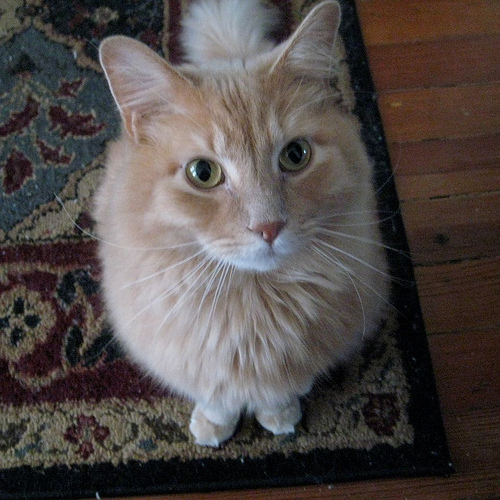
Boo Cat (photo by Susan Bauer)
Once upon a time, on the banks of a great river and in the shadow of a Great City, there grew up a small village make all of tents. They popped up like mushrooms, the motley collection of nylon and canvas and even some wooden shelters built of timber and plywood scavenged from the trash heaps, from among the unwanted things, the things cast away by the people of the Great City.

The people who came to the Village of Tents came because they had nowhere else to go and found themselves alone in the great world, in the shadow of the Great City, and without hope. And because they had no hope, in defiance and maybe a little in despair, the people named their village of tents "Hopeville", and clung to one another for survival, and began to build a community in the shadow of the Great City and its prosperity.

The people of Hopeville had very little in the way of material goods. They had neither TV nor washing machines nor bathtubs nor computers. Humid summer days by the river oppressed them with heat and mosquitoes; icy winds in winter with created a special variety of hell. Food they got however they might, through begging, and scavenging, and the kind gifts of strangers.

For the most part, the more fortunate residents of the Great City went about their business and paid no attention to the small village growing up in its shadow. Sometimes young men from the city would drive down to the river in their bright cars blaring music into the night and toss a flaming ball of rags into the village for sport. When a small canvas home would catch on fire and burn, the boys from the city would screech and yell, joyous with their conquest, fleeing back to the city in their bright cars before the sheriff or the fire brigade could arrive to put out the blaze.

What does it matter, the city boys told each other, crowing among themselves. They're only homeless people. And indeed, the boys went mostly unpunished, though the Fates see all.

And though the folk of Hopeville had little enough of wealth the way the world measures it, yet out of the night to their campfires crept creatures with even less still, poor and hungry and sometimes ill, frightened a little, and all alone.  Knowing what it is to be alone in the world and forgotten by it, hungry and cold and afraid, the people of Hopeville welcomed the creatures which the the people of the Great City had forgotten and cast out, and the people of Hopeville shared what they had, giving aid and succor to the lost creatures of the Great City. A few scrawny cats, a few starving dogs made their slinking way to the campfires of Hopeville, and were taken in.

What little food the people had, they shared, and the creatures were grateful, and loved the people, as cats and dogs have, down through the ages, wherever there have been folk to show them kindness.

Now among the people of  Hopeville lived a woman named Sepporah (not her real name),

Tuesday, December 18, 2012

To Be or Not To Be

I’ve recently “unfriended” my first person ever on Facebook. I’m feeling very sad about that. Sad and angry and just all out of sorts. You see, I really really do believe in open discourse, about everything and anything, no restrictions. 

Somewhere in the Psalms (or maybe Proverbs?) it says: “As iron sharpens iron, so one man sharpens another.” I take that to be a great little tidbit of wisdom. What good is it, after all, to only converse with people who have the same point of view as yourself? What do we learn? Nothing. We become dull. We need sharpening. Constant sharpening. 

Someone somewhere once said, “Can you listen to the poetry of your enemies?” In other words, can we enter into the deep feelings, desires, fears, hopes and hates of “the other.” We don’t have to agree, but until we understand, how do we build any lasting peace? 

So it was a Big Thing for me, The Unfriending. A Drastic Step, not to be taken lightly or without thought. 

Wednesday, November 7, 2012

Ollie The Cat


Ollie

I only know him through them, but I know them and I know the cold feeling of fear gripping you in that place below your heart when something unimaginable happens and you wonder how you're going to be able to save the life of someone you love so very, very much.

They're young, and beautiful and like so many of us, they are struggling to get along in this world. I can tell you she serves a fabulous cup of coffee. I can tell you they're great fun to Zumba with. I can tell you they are caring, compassionate and socially responsible people, just starting out in the world as we all once were, trying to make a go.

Ollie is their cat.  He was mauled by a dog this weekend past. He has injuries to his internal organs.

Thanks be to God (or the Universal Power, or Fate, or sheer dumb luck, or whatever floats your boat), there is a veterinary clinic in The City where charges are based on a sliding scale. So Ollie can get the treatment he needs. And what he needs is surgery.

They, his human moms, are planning to put handmade items on Etsy to help pay for Ollie's surgery. They are knitting away even as I type. (I'll share that page as soon as I have it.) But Ollie needs surgery now. Having volunteered a bit with various animal rescue groups and people who are much cleverer than I, I've learned about this tool called "chip in." Donated a few times myself.

I suggested to Ollie's moms that they set up a chip in. And here it is.

Ollie's scheduled for surgery this morning. Here's his chip in. You know the drill. Even a buck helps. And if you don't have a few bucks to toss toward's Ollie's cause, well, it's a tough economy out there right now, and I get it. Forwarding via twitter, facebook, email, your social media of choice helps hugely, too.

Here's Ollie's Chipin link:  Ollie's Surgery

Ollie
~~~~~~~~~~~ 
 stlcatlady is a poet, blogger, and freelance writer of short stories, news articles, and other such oddments, many of which center around her favorite subjects: felines , philosophy, and folklore. You may contact her by sending email to stlcatlady1 at gmail dot com. Thanks for reading!

Sunday, November 4, 2012

Blended, Not Stirred

Sasha
We have really no idea how old Sasha is. He was an adult when he came to us, frozen and more than half starved, four years ago this winter. However old he was then, he's older now, and is getting a little creaky. I no more have favorites among the cats than I have favorites among the offspring,  but Sasha is the one who spoons with me in bed at night, his head on my pillow. We're close.

A couple of months back, I decided to eliminate dry kibbles from the diet of the Fab Four (the house cats, pampered potentates that they are). As much as everyone was enjoying the nightly canned food treats, I thought this switch would be met by riotous rejoicing in kitty-dom.

For the most part, it was. The benefits to the Fab Four were obvious and immediate as well: more energy, better coat condition.

I had, though, failed to consider that dry kibbles are a little like crack, or at least like potato chips. The point is, they're addictive. Apparently,  according to exhaustive internet research, dry kibbles contain "animal digests" as an additive. This is to make the kibbles tastier to the discerning kitty palate.

Addictive. Like sugar is to us. Or salt. Or...crack.

Well, two of the Fab Four left the Dark Side right away, embracing clean living and canned cat food with a right good will. Not so Rikki the toothless and Sasha the one time starving cat.

You'd think a near starvation experience would make you willing to eat almost anything. Not so, it seems, not so. Rikki and Sasha went on hunger strike. I was going to post video of them, marching around the house, carrying signs with catchy slogans, paws linked singing "We Shall Overcome" in solemn and serious meowing. I knew you would have enjoyed it.  Alas, I have no such footage to share. You'll have to take my word for it.

Wednesday, August 29, 2012

Bargains


Gamayun, in a painting by Viktor Vasnetsov 
A chapter from the Novel-In-Progress

The Giri bird sat in the world tree, high, high and very high up; not the topmost branch, which was forbidden her, but close. High, high above the worlds which spun, a frothy and glowing foam far below.
She ruffled her dark feathers, settled more comfortably onto her branch. The world tree was older than old; tall it was, and strong, and though few winds stirred it, some did.
It did not do to relax one’s grip. It was unpleasant to fall.
With her sharp black beak she dug beneath one wing, grooming. She ferreted out a louse; in its impertinence, the crawly creature had been trying to feast on her blood; biting and clawing for purchase it had hurt her. She snapped its little carapace in her sharp beak, ignoring squeaks and pleas for mercy.
She was the Giri bird. She had outgrown mercy aeons ago.
Somewhere, down on one of the many worlds in the roiling soup below, something flashed, catching her attention. The Giri bird cocked her head, bent her bright eye toward the thing.
It had been several centuries since she had been intrigued. She hopped a little, further toward the end of her branch, to get a better look.
Interesting.
She thought she might go have a look.
Creaking from millenia of inactivity, the Giri bird stretched out her impressive wings. Feathers, razor sharp, grated and rustled against one another. She gave a preparatory flap, stirring up the winds of fate beneath her wings. One raucous, harsh cry, and she was launched.
Black wings spread wide, the Giri bird coasted in lazy spirals, down, down, down into the shining realms which lay, a thick fog, about the middle sections of the world tree. She was old, but her bright eyes were keen. It didn’t take her long to find what she sought.

The day was dark grey and cold. There was nothing to eat, and the babies were crying. Orghuz sat before the door of her yurt, the biggest in the small encampment, and chewed a small piece of straw.
A few flakes of snow blew, here and there, mocking her. The ground was dry, but the snow would come. Orghuz squinted at the low clouds. Tonight, perhaps.
Then the last of her clan would die.
A great, black bird of impressive wing span had been circling overhead, and dropped now, dropped from the sky, landing a few feet away on an outcropping of rock. It cocked its head, and looked at Orghuz out of one bright black eye.
She had thought it was a vulture, the way it had been circling, but it was something else. She had never seen such a bird. Some sort of hawk, perhaps.
“Have you come to feast on these old bones, sister?” She spoke to the creature. Why not? Who was there to hear, or to care? Besides, creatures had intelligence.
She knew this. It was good to be cautious. To be polite.
The bird said nothing, but opened its beak, silently. It flapped those big black wings, twice, then settled in to grooming itself.
Orghuz cackled. “Not much meat on my bones, even for you, feathered one.” She laughed at her own dark humor. The black one stretched her feathered head skyward, bobbing.
Perhaps she was laughing, too.
Orghuz did not know what to do. The men were all gone, all dead. Only a few teenage boys remained, and they the ones unfit for fighting. Maimed, malformed, touched by the gods, or cowards.
She glanced toward Orduk, a tall, shapely lad, golden hair falling in a stream of yellow across his shoulders. Thirteen summers, perhaps fourteen. She had lost count. He sat, his back to her, face turned toward the wide, empty plain, arms wrapped around himself, rocking.
If he turned toward her, she knew what she would see. Empty eyes, drooling lips.
Perhaps they should eat him tonight. They had not found water for days. His blood, his meat, would sustain the dwindling numbers of her family for another sunset, perhaps two.
They had not had to resort to eating one another, yet. It was only a matter of time. They had slaughtered and devoured the last of the horses three days ago.
Perhaps she should offer herself. I am an old woman. Why should I live and Orduk die? Yet even as the thought spoke to her, she knew it was false. There was more meat on Orduk; she would barely even flavor the broth of a soup.
Orduk was an eternal child; a man’s body with a toddler’s mind. She, on the other hand, well. Her wiley and quick mind had kept them alive, thus far. Kept them one step ahead of their enemy, the enemy who was hunting and driving them from their lands.
The cruel enemy who had killed all their men. All her sons.
Yet Orghuz knew her bag was almost empty of tricks. They had listened to her, gone where she told them: up, up, up into unknown lands, far beyond the high pastures. So far, the enemy had not followed.
But there was no water here, no game.
Orghuz feared she had led her people into a trap.
The enemy had no need to follow. The winter would finish off the tribe.
Orghuz felt the bright eyes of the bird on her, watching.
“Have you come to watch us die, feathered one?”
The bird gave a raucus cry that could have meant anything at all. Then, spreading those massive, night coloured wings, it flapped lazily to the top of Orghuz’ yurt, tucked its head beneath one wing, and slept.
They did not eat Orduk that night. Orghuz did not have the heart for it.
That night, she dreamt.
She stood alone on the bald knob of a treeless and grassless hill, high above the plains below. The wind whistled and tore at her clothes and hair. It was cold; she was barefoot.
Orghuz shivered.
For more than sixty years she had been athalto, seer, to her tribe. She knew this dreaming for what it was. A true vision.
She looked around her. The sky was grey beneath its listless cover of clouds. Where was the sun?
She could not tell if it were morning or evening.
There did not seem to be anything at all here she could use to help her tribe survive.
That in itself was a message.
Their time had run out.
A pain beyond sorrow slammed into Orghuz’ old chest, shattering the numbness she had felt for weeks and weeks now, wandering in the grey uplands. She dropped to her hands and knees, an animal in the dirt. The sharp stones and gravel cut her knees and hands, hurting her. Tears and spittle mingled with blood on the stony, lifeless ground.
Please.
Someone, anyone.
Hear me. Help us.
Orghuz swung her head back and forth. Her grey braids dragged in the dust.
I will do anything.
There was the sound of the flapping of great, night coloured wings. A loud cry, a raucous caw, sounded to her left. Orghuz raised her head, sat back on her knees.
Two bright black eyes regarded her with keen interest.
They shone out of the smooth face of a beautiful woman, sitting, as Orghuz did, down on her knees on the sterile ground. Her skin was moon pale, her hair in a thousand tiny braidlets long enough to sweep the ground. Her eyes were all pupil, no iris, no surrounding white, and were black as jet.
Her garment was made all of black feathers. It rustled and scraped together when she moved.
Orghuz, ahthalto for sixty years, recognized the woman for what she was: an Old One, a High One. She bowed, lowering her old head low, low, touched her forehead to the ground before this visitor to her dreams.
She remained there, silent. She would not be impertinent. She waited for the dream visitor to speak.
“Orghuz, your people are almost at an end.”
Orghuz sat up, sat back on her heels, and regarded the other woman. Her voice had been as a scraping whisper on the wind.
She nodded. “Yes, Lady, it is even as you say.” Why deny the truth?
“And you would save them?”
Orghuz was ahthalto; she was old and clever and quick of wit. She recognized the opening of negotiations.
“I would.”
The woman in the feathered garment nodded, her strange wide eyes, pools of black, glinted with interest. She cocked her head to one side.
“Do they deserve to be saved, do you think?”
Orghuz saw the trap, and stepped deftly around it. She spread her hands.
“Who among humankind deserves life, Great Lady? To live is a gift of the gods.”
The woman smiled, a strange twisting of her features that was not entirely comforting.
“Your words are well said, Orghuz of the Erdel. No one deserves life. It is a gift.
“But in truth, your tribe deserves it even less than most, do they not?” The woman cocked her head to the other side. The shrug of her shoulders reminded Orghuz of a bird fluffing its feathers.
“Your people have become corrupt and cruel, and the land vomits you out.” Wind ruffled the feathers of the woman’s black garment. “Why should I help you?”
Orghuz was a skilled bargainer. She bowed low to the woman, then spoke again.
“My Lady would not waste her time with such as I am, if there were not some small thing, some small service, her servant could provide. Perhaps,” Orghuz looked at the ground as she spoke, “Perhaps My Lady yearns to show kindness to a small people, and receive their gratitude.”
Orghuz felt rather than heard the creature’s laughter. It electrified the wind; even the little sharp stones beneath her old knees seemed to chuckle and shake.
“I like you, Orghuz of the Erdel.” Orghuz raised her head, looked up. The creature’s eyes glittered with light.
“I will help you, if you agree to my terms.”
“I listen, My Lady.” Orghuz peeled her ears. She must listen carefully. She must make the best bargain she might for her people.
The Creature spoke. “You are being driven by your enemies, westward, and upward, beyond the high pastures, and your back is now against the mountains. This you know. Beyond these mountains is a land that once belonged to a people who served me, long and long and long ago, before you or your people ever were.
“My people were conquered, all destroyed, by the ones who now hold that land.” The Creature’s dark eyes grew darker, and she frowned. “It was long ago.”
“The ones who are in my land now, they do not serve me.” She cocked her head again, turned her bright black gaze on Orghuz.
“I will give you their land, if you and your people will serve me.”
Orghuz nodded. It was what her people needed. Land. Home.
“How would we serve you, Generous Lady?”
The Creature continued to look at Orghuz; for what seemed like a long time, she said nothing. There was only the keening of the sharp wind, while the sharp stones continued to cut into Orghuz’ old knees. A thin trickle of blood continued a slow ooze into the ground where she knelt.
Even in her dream she felt herself slipping away. Her head was light with hunger. With blood loss.
“I would teach you a Way of Power.” The words were almost lost on the wind, but Orghuz, desperate and despairing, caught them, listened, nodded.
“You would serve me with blood. And cruelty.” Orghuz glimpsed an ancient madness peering out from behind the bright black eyes.
“You will wipe the Other from my land; you will never make peace.
“I will make you a queen, ahthalto. A queen of your people. You will rule for seven generations, and will give birth to many sons.
“Your daughters and their daughters will be queen after. So long as you keep our pact.”
Orghuz listened to the Creature. “I am old, Feathered Lady. Will Old Orghuz yet give birth to sons and daughters?”
The laughter of the Creature was sharp. The wind swirled up a little dust devil of amusement.
“Do you have a maiden in your camp, Orghuz? A maiden ripe for mating, succulent and sweet, who has not yet known a man?”
Orghuz thought, then nodded, one solemn swing of her old grey head. A heaviness laid itself on her chest, twisting at her heart.
“Yana is such a one, Lady.” Beautiful Yana, thirteen summers old. Hair the color of sunlight a silken fall to her swinging, swaying hips. She was ripe and fertile, even though there was not enough food, nor had been for several months.
“Good.” The Creature grinned, head bobbing in a birdlike parody of a nod. “Yes. She will do.”
Orghuz waited. She would hear the details of the deal before she agreed. Before she bartered young Yana’s life away.
As if it were not already lost, Yana’s life, along with all the lives of the tribe. The winter would have them all before long.
“Three days hence, gather your clan, Orghuz, all who are left. Bring the Yani child to me. I will tell you how the sacrifice of the Yani child is to be made. I will give her youth, her fertility, her beauty to you, and you will rise up young and beautiful and strong, able to bear the many sons and daughters I have promised you.
“But it is not enough, for you, alone, to grow fertile. You must share your gift. For three days and three nights you will share yourself with the men of your tribe, one and all. They will be potent with you and, having dipped into your renewed well, they will be potent and strong and full of seed with the women of your tribe, and in the summer will be many children.
“Every seven years, every woman of your direct bloodline must keep this rite with me, your daughters and granddaughters and great granddaughters, and they will be queens among your people. She will be fertile and I will fill her with a Power, the way of which I will teach you.
“If any one of your daughters, though, keep not this rite with me, she will not have joy of her children. She will die before they are grown.
“I will hide you, Orghuz of the Erdel, you and those of your tribe who remain, in the deep mountains, for five generations. Game will you have, meat and fruit and milk, and be filled and full, while your numbers grow and the people who lie in my land, dishonouring me, slumber away the years, not knowing the weapon I forge at their very gates.
“Then, when you are strong, you will pass down from the mountain, and take the land, and it will be yours, so long as you keep our pact. I am the Giri bird who sits in the tree of life.
“What say you, Old Orghuz of the Erdel? Will you make a bargain with me for your people?
“Or will you die, here in the winter, and pass from the world and be gone, seeing as the time of your people has come.”
Orghuz bowed her head low to the ground before the Creature.
“My Lady is generous to her servants. I accept your bargain.
“Tell me what I must do.”
~~~~~~~~~~~~~~~~~~~~~~~~~~~~~
stlcatlady (sometimes also known as M. Dawn Blaloch) is a poet, blogger, and freelance writer of short stories, news articles, and other such oddments, many of which center around her favorite subjects: felines , philosophy, and folklore. You may contact her by sending email to stlcatlady1 at gmail dot com. Thanks for reading!

Thursday, August 23, 2012

"Good Morning, Neighbor!"

We've been trying for a while, the neighbors and I, to put a stop to some small time drug trafficking on my street.

It all started with the old man who lived in and owned the three family flat .He and his wife had lived there for thirty years or more. At least, that's what they say, the neighbors. The long timers. The ones who've been here so much longer than Spousal Unit, the thirteen cats, and I. I saw him once or twice the year we moved in. An old, quiet, black gentleman, mourning his wife, who had died. They had been a vital part of the neighborhood. "Good neighbors, good people." So I'm told. It seemed that way to me.

The wife died and, as so often happens, the old man, her long time partner and mate, did not long outlast her, at least in this world. Reunited, they moved on to new adventures. The house fell vacant.

Either there were no heirs, or no heirs wanted the modest, two story brick building, at least not to live in. It became one of those things we all, or most of us, dread to have on our blocks, in our little urban villages, cancers in our communities. It became an "investment property." A piece of property with an absentee landlord. A landlord who provides the capital, but lives somewhere else, far away. Somewhere not here. Too far away to be held accountable. Not a part of the community, of the people with skin in the game.

There were a few years of chaos. People in and people out. Prostitutes once, whose rowdy, rude, and sometimes violent customers terrorized the block. A stop was put to that. The building changed hands. Owners and tenants came and went.

When "George" (not his real name) moved in to the building, it had been vacant for a good half year. Things were tense in the village; neighbors were hunkered down inside their homes. No one went outside, much. No one smiled. No one spoke. We all looked with hostility and suspicion at anyone we met on the streets, neighbor or no. It was a fortress mentality. We were all alone, each of us, in hostile territory.

I think, though, George didn't get that memo. Didn't get the notice. Didn't "get it", the way things were here. Desperate people hanging on, trying to get by. Trying to stay safe. Trying not to let the hoodlae take over the hood.

George had the audacity to sit on his front porch (are you kidding me? the FRONT porch?) and play his guitar. He was quite good, really. It was an old, battered acoustic thing; he strummed chords, mostly. It was a welcome relief from the heavy, rafter rattling base coming from the mobile stereo systems of the young thuglets as they raced through the streets, gone before the police could arrive to answer the constant complaints. It was summer. I would sit in my upstairs office, the windows open, writing. The mellow chords, carrying just a hint of the blues, drifted in on the breeze. Despite myself, I smiled.

The first time we actually met, George knocked on my door and asked to use my telephone. I think I stared at him, slack jawed, for all of ten seconds before practically slamming the door in his face, my heart hammering. Who WAS this guy? Hadn't he read the play book?

It seemed he hadn't. He had the audacity to speak to everyone who passed by on the street. Speak to them! Introduce himself, wish them a good day. What the heck? We watched him, we did, from behind closed doors and curtained windows, this strange middle aged black man with his bluesy guitar and friendly "Good morning, neighbor!"

"Who the heck does he think he is", I asked the Spousal Unit. "Mr. Rogers?"

Over the next few years, in almost imperceptible increments, a change crept through our little village. I do believe, even now, it was wrought in large part by George and by his determined, relentless friendliness.

People began to speak to each other. "Good Morning!" we would say, now, to each other on the street. We began to know a little more about each other, creeping out of our fortified dens like frightened and hungry kittens, coming out for the food we so desperately need, though we fear the stranger offering it.

Was George aware of the change he was bringing about? I doubt it. He played his guitar; he brought me flowers, scoured from the grocery dumpsters. Many, many days, in the worst of depression, George's salvaged flowers in their crumpled cellophane sat on my kitchen island, their bright colors bringing cheer, reminding me to smile, and to carry on.

He learned about the Thirteen Cats, the managed feral colony, the community kitties who make their homes around the yard and under the deck. He took them into his generosity, too, salvaging litter and food when he could, dropping it off with a smile and a "Thought you might be able to use this for the cats." If you've ever participated in managing a colony of community cats, you know that extra food is always welcomed.

His demonstrated compassion began to open my heart.

I learned a few things about him, over the years. He was a veteran. He was a cancer survivor. He was a recovering addict. He had been homeless. Maybe it was that, the former homelessness, that made him so joyous to be in this little home, in our little urban village. That made him so industrious in making it a home; in doing what he did to foster community.

For years, all was quiet. All was peaceful. The block was blooming, and George was a real contributor to that.

Then things began to change. Sal (not his real name) moved in. Sal and George were brothers.

Things began to unravel a little. Sal had lots of friends; there began to be lots of traffic, at all hours of the day and night, to the little three family flat. The guitar disappeared. I noticed, because I missed the afternoon music floating in through open windows.

One evening, well after midnight, they woke me up, shouting.

"Don't you like it here?" George, standing in the middle of the street, berated his brother. "Isn't this a nice place? Don't you want to stay?

"You're going to mess things all up if you don't just stop!"

Sal stood on the porch, swaying, drunk or stoned. He fell down. George let out a string of frustrated commentary, then helped his brother into the house.

I figured Sal had been on a bender. I closed the windows and went back to bed.

There began to be cars, strange cars, parked up and down the block. Some with no license plates. Some with license plates from far away. Sal and George were always working on cars.

The Spousal and I thought, "Well, ok. People have to make a living. What do we care if they're working on cars without a garage license." But it was more than that. Often, a car would be parked in front of their house, its hood open, but no tools in sight. Sal and George would be dressed in bright blue. People would come, stay for a few minutes, then leave.

It takes us a while, but eventually we get it. They were trafficking in drugs. They and the people who visited became bolder and bolder. The drug deals were happening right in front of my house. I stood at my upstairs windows, watching the money change hands.

The people who came to buy drugs were disruptive. One group of young men began throwing things at the house of one of my neighbors, believing this neighbor to have reported some misdeed or another to the police. A gaggle of thugs followed female neighbors, shoulder chucked them, laughing, attempting to intimidate us. The corner store was burglarized. Twice.

And then of course there was the constant noise. The "boom boom boom" of loud, hate driven music in the visiting cars, the profanity, the fighting at all hours of the day and night.

It took a while, but finally, enough was enough. Working with the Neighborhood Stabilization Officer, the Alderman, the Problem Property Coordinator, and the police, the neighbors banded together and the place was shut down.  That absentee landlord has never even shown his face, hasn't responded to any invitations to meetings. Has certainly not put some skin in the game and come to deal with the quality of life issues his neglect was allowing to happen.

Finally, the building has been condemned. At first, this had no effect on the residents, the two brothers and a woman who had moved in. They ignored the posted signs and went about their business. The police returned. George was caught being on the property, after having been warned to stay away. There were bench warrants, and he was taken away. This week he was back.

The cars with their hoods open, no tools in sight, were parked again in front of the building. George was again sitting on the porch wearing royal blue, open for business.

This morning, the police came again, and a big truck full of city workers with plywood and drills and tool belts. They had come to board the place up. George had to go.

I sat in the upstairs office, looking out the open windows, weeping. I know we can't enable drug trafficking in our midst. There are children growing up on my block. There is one young couple with a baby on the way, my beautiful young neighbor radiant with the promise of new life she carries inside her. I know these children deserve a safe place to grow up. I'm willing to fight to see to it that they have it. To allow the drug dealers to stay, to look the other way, is to participate in the cancer they bring to our village. It's to allow the violence. It's enabling of the worst kind. It helps no one. It hurts everyone.

Yet still, I watched him go, and I wept. Once upon a time, these two men were also the promise of new life, growing inside a beautiful young mother. I don't know what their lives were. I don't know what wrong choices they made, and I don't know all the twisted, subtle ways in which we failed them.

I confess, I'm glad to see them go. I don't want the drama, the danger, the chaos.

And yet, I will miss that bluesy guitar, the crooked smile, the "Good Morning, neighbor!"

I wish them well. I wish it could have been different.


~~~~~~~~~~~~~~~~~~~~~~~~~~~

stlcatlady is a poet, blogger, and freelance writer of short stories, news articles, and other such oddments, many of which center around her favorite subjects: felines , philosophy, and folklore. You may contact her by sending email to stlcatlady1 at gmail dot com. Thanks for reading!




Monday, July 23, 2012

Enemy


Yesterday was Sunday.
I try to dredge up yesterday so I can have something, how does the exercise go, something on which to practice the craft without having to worry about plot and characterization. It's writing, without having to produce fiction on demand. Every writer should keep a journal. Every writer should write everyday.
It’s like practicing scales, for a musician.
Don’t write about feelings (the exercise says). Hone your powers of description.
But the end of yesterday's feelings were overwhelming. They haunted my night. They’re still with me today, crushing. Consuming.
I fall back on the tried and true coping mechanisms to get me going. The things I know are bad for me, but work, or have worked, through the years. Not exercise - a long, rambling walk - and a decent, healthy breakfast, positive thoughts and inspiring music. I can’t face the neighbors today; I can’t dredge up the wherewithal to smile and wave, to stop and chat, to share energy and heart, to build community.
Instead, I reach for caffine, a stiff cup of coffee, knowing it will strip the tyrosine, and therefore the dopamine and serotonin, from my brain. I reach for anger, hoping the shot of adreneline will come, will get me up, will get me moving, at least enough to function.
But the anger remains elusive; the adreneline doesn’t come. Adrenal exhaustion after too many years of too much stress have left my fight or flight mechanism broken and sputtering, a useless wreck. I can neither run nor stand and fight. 
I draw the drapes, close the door. I withdraw to the cool dimness of the central, interior room, the kitchen.
I hunker down and hide.
The cats come with me, of course, and the computer. The cats, sensing my mood, gather around, offering comfort, offering companionship. Sasha stretches his furry, elderly self out on the bar, hangs his head over the edge and watches me with soul-filled eyes. The girls cluster at my feet, a quiet feline presence.
Healing begins. Or, at least, a re-centering. I’m learning there is no “healing” from this black beast which claws at my soul and goes by the name “Depression.” There’s no knight in silvered armor who can drive it away. It must be lived with. It must be managed. Every so often the sacrifice of a day, or a week, must be relinquished to it.
It will never go away.
But it can be managed, and must be. Today is only one day. Tomorrow may be better. I just have to survive today, one moment at a time.
So I struggle to go on with the daily work, to put words on paper, even if not many, and of not much merit. I carry the sprinkler out to water the lilac, much loved and tended with great care, but now wilting under the crushing burden of record heat and draught. I get dinner going in the crockpot.
These small tasks exhaust me, but I keep moving, or try to, even if it is with slow feet and sluggish brain.
Part of my responsibility to myself, as someone with a chronic and incurable illness, is to learn to manage that illness as much as I can. A diabetic must test their blood and take their insulin. A heart patient must not smoke. An asthmatic must carry their inhaler with them. As someone with major depressive disorder, part of my responsibility to myself has been to learn as much as I can about my own personal beast. Over the last four years, I’ve learned a lot.
I’ve learned this: one way of understanding depression is as “anger turned inward.” This time, as I struggle to stay sane in the middle of the crushing gray fog which is the clutch of the beast, this time I know where the anger came from, and I know it’s justified.
How liberating it would be, how joyous, to be able to direct that anger, that righteous zeal, that bitter ire, toward the person who so supremely deserves it.
An eye for an eye.
Satisfaction.
Justice.
And yet, and yet… that’s not the philosophy I espouse. I cling, however tenuously, to a newer testament, a newer contract.
Take no account of a wrong that is suffered.

Forgive, that you, also, may be forgiven.
Love is patient.
Love is kind.

I am a huge fan of the TV series Andromeda, and Tyr Anasazi was my favorite character on the show. A short exchange of dialogue from one episode went like this:

Tyr Anasazi: What would you like, Jaguar?
Charlemagne Bolivar: The usual. Hundreds of grandchildren, utter dominion of known space and the pleasure of hearing that all of my enemies have died in terrible, highly improbable accidents that cannot be connected to me. And you?
Tyr Anasazi: [Laughs] The usual.

I understand that sentiment. It lurks right beneath the civil and civilized facade I cultivate with such care and so little success. The person I am is always present behind the carefully constructed mask of who I want to be.
My known space, the space over which I crave utter dominion is not so large as the galactic expanse known to Tyr Anasazi (who, if you are not a fan of the show and don’t know, did come after all to a terrible and tragic end). My known space is smaller: my house, my yard. It includes the public spaces through which I wish to move in safety and in peace.
Attacked, my space violated by an intruder who didn't even have the honour to show their face, I, like Tyr and Charlemagne Bolivar, find myself wishing for, indeed craving, “the usual.”
I am fascinated by words, and by their origins. Today I ran across this definition:
Enemy: one who feels hatred towards, intends injury to, or opposes the interests of another
From Latin in-amicus, ie, not friend.
And that, of course,leads to:
Friend: a person whom one knows, likes, and trusts.
In Latin, Amicus (ie, friend) comes from the same root as Amo (I love). Likewise, the Germanic freond (from which comes our English friend) is also derived from freon, to love.
I ponder the actions of my not-friend, the person who has wounded me and has been the cause of so much sorrow today. I reflect that he (or she—how can I know since the not-friend was too cowardly to show their face?) did indeed intend me injury. He (or she)did indeed oppose my interests.
It’s hard to digest, knowing I never did this person any harm. Or if I had, unknowingly, would they not have come to me and complained of the injury? Would they not have trusted my goodwill enough to know I would do my best to put right any harm I had done them?
But trust is a mark of friendship, and this person has shown himself to be inimicus. Not friend.
Enemy.
It’s disconcerting to find you have enemies in the world, in your village, on your very block, among your neighbors. It’s disconcerting to discover there are those who wish you harm.
Had you asked me day before yesterday, I would have answered, “I have no enemies.”
And yet…
And yet.
Someone harms me. It hurts. The beast within howls, clawing, demanding “the usual.”
I find I'm neither able nor inclined to fight back. I’ve chosen to attempt a civilized and harmonious life, however much I struggle to implement that.
I’ve rejected “an eye for an eye.” I cling to a newer covenant, a newer contract. So the black beast chews on my own heart, rather than on the heart of my enemy. It sinks me in the fog of despair; the gray, stultifying wasteland of depression.
I struggle to define a response.
“The usual” is not an option. Are there others?

Love your enemy.
Do good to those who hate you.
Pray for those who despitefully use you.
Forgive.

Are you kidding me? I don't want to forgive. 
I don't want to do good.
The beast sinks its fangs into my heart, ravenous, demanding retribution. Demanding “the usual.” Lex Talionis. The law of the talon.
An eye for an eye.
And yet… and yet…
On better days, days when thinking was clearer, days when dopamine and serotonin were at good levels, I rejected that old lex talionis, that old Law of Retribution.
“An eye for an eye just leaves the whole world blind.”
On better days, I made better decision. I chose compassion. I chose non-violence. I chose peace. I’m not there yet.
But I’m working on it.


What about you? How do you try to respond when you've been wounded? Discussion in the comments below.


~~~~~~~~~~~~~~~~~~~~~~~~~~~

stlcatlady is a poet, blogger, and freelance writer of short stories, news articles, and other such oddments, many of which center around her favorite subjects: felines , philosophy, and folklore. You may contact her by sending email to stlcatlady1 at gmail dot com. Thanks for reading!


Monday, January 30, 2012

Your Share

This Monday morning I'm off to a slow start. My regular Monday writing buddy couldn't join me today. However, being, like the Thirteen Cats, a creature of habit and structure, I hied me off anyway to the coffee house to write.

There's a thing I always find fascinating. It's how different coffee houses have different personalities, different flavors. I, Gentle Reader, am somewhat of a connoisseur of coffee houses, so I know whereof I speak.

For example, my current favorite space is Shameless Grounds, for so many reasons. I visit them about twice a week, drink their coffee, make use of of their WiFi, watch their people, and write.  It's a warm and inviting space, in an old warehouse: quirky and inviting and spacious. It's nestled up a short flight of stairs in the Koken Art Factory. And, despite its billing as a sex positive space (or perhaps because of it),  the changing art on the walls is tasteful, the staff is welcoming, and plain vanilla types like Spousal Unit and myself are more than comfortable.

Shameless has a distinct personality. Creative vibes fairly ooze from the walls, probably because of all the artsy types at work in studios in The Koken. Whatever the reason, when I'm there, the words fairly pour out of my fingertips onto the page. Well, onto the screen.

And perhaps, because it's independently owned, it attracts more independent types. Perhaps.

But that beloved space is a bit of a hike for me, and today the old body was sluggish and slow. So I opted  for a shorter trek, and here I am in another of my favorite haunts, drinking chai, listening to Voltaire's album, "To The Bottom of the Sea," writing, and people watching.


This place, while closer to home, is a corporate space. It's a neighborhood space, too. I see neighbors I recognize from walks and from neighborhood association meetings and grocery shopping. The staff is warm and welcoming and friendly; the space is well laid out, spacious and warm. The coffee is good.

But it's definitely a different crowd.

I want to write something about not taking more than your share. As I'm here in the cafe, in the little corner with the plug ins where people with laptops come to sit, I can't help but noticing, once again, how the corporate people (and it's SOOOO easy to tell the corporate people from the artsy types) hog up way more than their fair share of space.

One pair has set up shop in the middle of three tables, spreading out onto a second table, and blocking access to the corner table. So, instead of two seats, they're essentially hogging up six.

Likewise for the pair next to me. They have two laptops, are using two plugs. But they've moved another table over against theirs, and have spread out. So, even though there are twelve seats, and twelve plugs, there are only five of us over here.

A student type, backpack on one shoulder, peers around the corner, netbook in hand, hunting the elusive electrical plugins. The four corporate types look up, sneer a little, and return to whatever it is they're doing. They've blocked access to the one corner table remaining. The student can get to it, but she'll have to climb over them, ask them to move.

She's twenty-ish. Not brave enough, yet, to insist on fair play. To insist on fair treatment. Too young to risk being rude. Too old to say, with the unabashed clarity of a child,"Hey! That's not fair!"

Of course, they could scootch over, invite her in. (Isn't that what civilized folks should do, Gentle Reader?) But they don't. Perhaps it doesn't occur to them.

Perhaps.

Time goes on; the crowd shifts. The couple taking up the center table of three packs up and heads out. An artsy type, tennis shoes, jeans, longish hair, backpack, shows up. I watch to see which table he chooses. I've seen this before. I can guess, but I have scientific training. I watch and observe, collecting another data point.

He takes one of the end tables. The back pack goes under the table, out of the way. (As mine is. tucked up against my legs. The corporate types routinely toss briefcases onto table tops, and, if there's not enough table tops, they grab another, or chairs from another table. God forbid those briefcases go onto the ground, out of the way.)

I know this isn't something I should worry about it, but it annoys the old crusader in me. And of course, these people don't even realize they're acting like asses.

They would be irritated though if, for example, I had climbed over the one couple in the middle table, to get to the corner one, and to the plug. (I've conducted that experiment before, Gentle Reader.)

So I find myself wanting to write a short story with the theme of  "taking more than your share." The reason is that I think a whole lot of our societal issues are a result of just this thing...taking up more than your share.

Am I guilty too? Of course. Not of this particular infraction, perhaps,  but I live a pretty leisurely life. Do I take more than my share? Or do I pull my weight?

Do I add value to the world?

How many people, for example, are plunged into poverty and into the unthinkable violence of war because we plunder their land for oil to feed our national gasoline addiction?

How many people go without basic health care?

How many of our middle school kids join gangs, because "if you gonna eat around here, you gotta be in a gang; they're the only ones with any food,"  while others of us attend $5000 a plate black tie dinners?

Is it so much to ask of our civilization, of our tribe, of our people, that everyone eats, everyone gets health care, everyone has access to a warm dry place to sleep at night?

Is that too idealistic?

Is it too much to ask to have access to the damn wall plug?

~~~~~~~~~~~~~~~~~~~~~~~~~~~

stlcatlady is a poet, blogger, and freelance writer of short stories, news articles, and other such oddments, many of which center around her favorite subjects: felines , philosophy, and folklore. You may contact her by sending email to stlcatlady1 at gmail dot com. Thanks for reading!

Thursday, September 8, 2011

A Short Short: Bath Day

Thursdays = Bath Day at The House of the Thirteen Cats. The managed feral colony is exempt, for practical reasons, but indoor kitties get a good soaping during the summer months, to assist with flea control. All four have been bathed today; the bather is fairly unwounded. However, there's nothing quite like the ire of a pissed off cat, and I'm spending the afternoon with four of them. Perhaps Tuna will appease Their Royal Wetnesses....

Friday, July 22, 2011

I Wonder (A Poem)

copyright 2009 by M. Dawn Blaloch

I wonder if the grave is cool and quiet
Endless aeons drowsing in the dark.
Wrapped finally in peaceful dreamless sleep
repose at last for arm and brain and heart.

Wrapped finally in peaceful dreamless sleep,
despairs all ground to dust, and hopes dissolved;
A chance to still the restless, beating heart,
all loves forgotten and all fears resolved.
A chance to still the restless beating heart
Disperse, at last, the mind's be-fevered riot.
To slip, at last, the bond that bound life to us;
I wonder if the grave is cool and quiet.
~~~~~~~~~~~~

 stlcatlady is a poet, blogger, and freelance writer of short stories, news articles, and other such oddments, many of which center around her favorite subjects: felines , philosophy, and folklore. You may contact her by sending email to stlcatlady1 at gmail dot com. Thanks for reading!

Wednesday, July 20, 2011

Cats Connect

In which we ponder further the wisdom of cats.

Cats Connect

We often think of cats as being solitary creatures. Yet my experience, with both the house cats and the Colony Cats, says t'ain't necessarily so. It seems to be true that each cat does indeed have a well defined personal space, a physical territory. I've seen this with both the house cats and the Colony Cats. For example, in our house right now, Treasure's spot is the clothes drying rack; Simba relaxes on the steam trunk; Rikki has claimed the top of the ice chest. Sasha's spot is an empty bookshelf. These locations are rigid, and fiercely defended. No body sits in anybody else's spot.

And yet, each of these micro-territories exist in the same room: the upstairs sun room / yoga - tai chi room.

Friday, June 10, 2011

Another One Like Me

In which we set out on a small journey, encounter a sage, and receive a gift.

I have never known a cat, or a toddler, who would not greet one of their own. The greeting may not always be friendly, but always there is acknowledgment. A fellow cat, a fellow toddler, is never ignored.

Watch two toddlers encounter each other in a room of adults. Each child may be oblivious to the other adults, save their own caregivers. Or not. Some children seem quite gregarious, greeting and interacting with everyone in sight, true sanguines. But even the shyer, more reserved toddlers will seek out other toddlers, will want to play, to interact. It's as if there's some deep recognition: another one like me.

In my decade of feral cat watching, I've noticed the same phenomenon amongst my feline neighbors. Let two cats pass one another in  yard or alley. They will acknowledge one another.  The greeting may be friendly: tails held vertical, at right angles to the body, happy sniffings and rubbings. It may be grisly: backs arched, yowlings and growlings and hissings, a display of force, a statement of territory. Or it may be something in between: an ear twitch, a rump wiggle, a tail flick. There are many gradations, and the language of cats is subtle.

Only humans know to shun their neighbors.

Wednesday, June 1, 2011

What Does Depression Feel Like?

  • Everyone, will at some time in their life be affected by depression -- their own or someone else's, according to Australian Government statistics. (Depression statistics in Australia are comparable to those of the US and UK.)

When I was in my mid twenties, I read a novel called "Smart Women" by author Judy Blume. I don't remember, now, much of the plot. Something about three divorced women who became friends, the adventures and misadventures that resulted. Here's what I do remember: one of the characters, one of the women, had a complete and total nervous breakdown (as they called them then. Today, the preferred term seems to be "major depressive episode.")

At the time, I was divorced, living in a small town with three small children, juggling dating and parenting and career. I had a bright, shiny new bachelor's degree, and was working as a junior accountant in a public accounting firm, pursuing the CPA designation for all I was worth. From within that context, I read about this character's breakdown.

Thursday, March 17, 2011

Morning of the Lynx

In which we consider a secret which some would keep from us.

Thursday's Child

You know, Gentle Readers, that I am not "a morning person." I may have mentioned that a time or two before. And yet mornings are often so full of wonderful surprises. I really should do morning more often.

This morning, I had no choice but to do whatever had to be done to get the carcass upright and rebooted and at least partially functioning by the really scandalous hour of seven a.m. At the latest. For things to work out optimally, I really, REALLY needed to be out the front door by six. A.M. Ante-meridian. Before noon. Morning. Oh my god.

How do people DO this? I used to do it, back in the day.

Wednesday, March 9, 2011

To Bear With Unbearable Sorrow

Don Quixote by Gustav Dore
"I come in a world of iron to make a world of gold." ~~Don Quixote de la Mancha

It's cold today; cold and gray. It feels more like November than March. I look out of my second story window, out across the street. Bare and bony tree limbs still reach towards a winter sky. Today that sky is devoid of color; thick clouds conceal a sickly sun. Where is the sun? Where is spring?

I know this feeling of chill today has more to do with my mood than with the season. It's forty-two degrees Fahrenheit today, not balmy by any means but certainly not bitter. Only a few weeks ago we were rejoicing when temperatures rose into the forties. Today that same degree marker seems cold, uninviting, unfriendly.

Spring is on the way. My perception of today as a cold winter's day is an illusion. My perspective from the second story window is flawed. Downstairs, outside, out in the garden and in the yard, signs of life, signs of spring are everywhere. The forsythia is covered with buds, about to explode into bloom. The lilac is likewise bursting with buds. Two timid purple crocus in a sunny spot have already lifted their brave faces to the southern sun. Daffodils and hyacinth have pushed green leaves up through the mulch. Even the mystery potted plant which lives in my upstairs south window has put out a little red, five petaled flower, the first after winter. Life is rich and wriggling down in the garden. It's only up here, facing north, facing the darkness, where things seem so dead and cold.

Tuesday, March 8, 2011

Saving Sasha

In which we read of fearful giants, the courage of a cat, and kindness richly rewarded.

Sasha in bed
He was starved. I have never seen a cat so thin, nor so afraid. Today as I write, he sleeps in a basket, on a cushion, long gray fur fluffed out, and a contented smile gracing his elegant face. His beautiful tail, a truly glorious tail, long and fluffy and fat, drapes across dark gray paw pads. He is a vision of catly contentment, and I smile, seeing him so. The sight is like healing oil on a parched and cracked heart.

Two years ago things were very different. It was late October, perhaps early November, when I first noticed him. It was feeding time for the feral colony, and there he was, in the biting autumn wind, hanging around at the edge of the group, crying. He was clearly terrified. Only his hunger drove him to us.

That tail, which now is so magnificent in its fat, furry glory, was like no tail I had ever seen. The fur was almost gone; it looked more like a possum's tail than the tail of a cat. Worst of all, it was ridged and lumpy. What I mean is there was so little flesh over the bones of the tail that you could see and count the vertebrae. He was starving. In his desperation, somehow he found us.

Wednesday, March 2, 2011

Cats are Minimalists

In which we consider the lilies of the field, the birds of the air, the contentment of cats, and the price of that which is truly important.

It feels, today, as if spring might actually be on the way. After months of ice and snow, weeks of temps in the zero to ten degree range, nights plagued by tornadoes and days of gray skies, today, today it's sunshine, blue skies, and fifty-three degrees Fahrenheit. The upstairs windows are thrown open. There are tiny buds on the forsythia bush; brave green shoots are giving it a go in the bulb garden. I cross my fingers; I allow myself to give way to hope.

Looking out the back window, I see the Colony Cats are soaking in the rays, as well. Handsome is stretched out in all his elderly golden glory along the deck railing, basking in the southern sunlight. The four house cats have claimed perches by the open windows. They loaf, pictures of contentment. Not a worry in the world wrinkles their furry brows. I envy them. I pause and ponder, wondering what I might learn from their ways.

As I write, it's the first of the month, and so a part of today was spent in the onerous task of paying bills -- mortgage, utilities, communication, transportation, credit cards -- while trying to be sure enough is set aside to cover food, cat kibbles, cat liter, vet bills, prescriptions. This necessary task always puts me in a bad mood. I have to make time, afterward, for gratitude. Time to think over the abundance in my life, to shift the focus away from what I don't have to the many joys I do. As my great-grandmother would have said, to "count my blessings."

I contemplate the cats in their contentment; I observe how they enter fully and wholeheartedly into the joy of this sunshiny day. They pay no bills; they owe nothing and own nothing. I stop and consider if this is part of their secret, for who would deny that cats are enlightened beings?

"Behold the birds of the air, for they sow not, neither do they reap, nor gather into barns...Consider the lilies of the field, how they grow; they toil not, neither do they spin. And yet I say to you, that even Solomon in all his glory was not arrayed like one of these."

Would life be simpler if we had less stuff?

I hate to clean house; it seems always to me to be a terrible waste of time. I clean, I cook, I wash dishes, I do laundry, taking precious minutes and hours out of my schedule, time I so desperately want to spend on other activities. Within days it's all to do over again. And again. And again. It's a horrible frustration. And yet, I despise living in chaos, in clutter. When my surroundings are cluttered, which they most often are, it's hard to focus. It's like the physical clutter and chaos spills over into mental and emotional chaos and clutter. Sometimes, I leave the house to escape it. Out I go to the organized, clean space of coffee house or library to get some relief.

Sometimes, I think the answer would be to have a housekeeper.

Tuesday, March 1, 2011

Small Candles

In which we take up the topics of sisters, dogs, dirty politics, and hope.

She joined our family before I have conscious memory. She died when I was eighteen. In every way, other than biological, she was my sister.

We slept in the same bed. She was terrified of storms. When I was eight and she was five, a terrible tornado struck and devastated Lubbock, Texas. The Panhandle town was leveled. The apartment where our family lived was in the direct path of the monstrous storm; if I close my eyes, I can still today conjure up the sound of shrieking winds. It sounds nothing like a freight train; the low lone whistle of a freight train is a sad and strangely comforting sound. A tornado howls like a demon.

Over the years, I've learned to deal with my relationship with stormy weather. I happily head to the basement when necessary; when the "all clear" sounds, I'll spend the next hour foraging for carbohydrates, but I cope. She never did. The sound of hail striking windows and roof would send her into a panic attack, trembling and shivering. Even in her teens, she had a prescription for tranquilizers, used only during storms.

She wasn't fond of cats, though we once had a small Siamese named "Tejas" (pronounced as in the Spanish, "TAY - haas") with whom she became fast friends. There was also a dog named "Sugar-Plum," a big mutt of a thing, who lived for a time with us. She loved him, loved him dearly. I can still see them rambling the neighborhood together. When he died she grieved for months, inconsolable.

Friday, February 25, 2011

Into the Darkness and Out Again

In which the Cat and the Woman travel through Darkness, a Light is born, and a Door is discovered.
 
Be advised, Gentle Reader, that the post you are about to read is Part Five in a serialized tale. You might want to read Part One: The Coming of the Cait Sidhe and Part Two: The Lands Beyond the Lands We Know  and  Part Three: The Cat Speaks  and Part Four: A Closed Door  if you have not already.


She stood at the top of the stairs, facing into darkness. She began to feel her way down, one hand along the rough stone wall of the foundation for balance; the other clinging tight to the basket her grandmother had woven so many years ago. The air was cold and damp feeling; she could see nothing. The woman feared cobwebs, and spiders, for she came down here but seldom, and never without a light. None brushed her face or ran across her arm, however; she acknowledged her gratitude. With bare feet she felt her way to the bottom of the stairs.

The wooden stairs came to an end; the soles of her feet felt cool flagstone. She stood on the floor of the basement, walls of stone and earth rising 'round her. For all she could tell, her eyes could have been closed, so dark, so lightless was the place. One hand still resting lightly on the stone wall, she glanced back over her shoulder, but the door had swung closed; not a drop of light followed her down. She inhaled the earthy scent of soil and stone; her left hand touched the roughness of stone walls, the soles of her feet rested on the smoothness of stone flags. She listened and listened for the Black Cat, but cats are quiet creatures when they choose to be. What she heard was the beating of her heart, the pulse of blood washing in her ears.

Thursday, February 24, 2011

How Raven Got His Name

In which a twin is well named, and other tributes are offered as well.

Feral Raven , refusing to look at the camera
"So," he asked me, eyes alight with a gentle twinkle. "How many black cats DO you have now?"

"I don't HAVE any black cats," I explained with patience. "No one HAS a cat." I gave a good natured smile. It was a matter of semantics.

"Well, how many live here?" he asked, grinning. I grinned back.

"Hmmm." I pondered for a minute, whether to continue the semantical debate or give in and answer his question. I opted for compromise.

"I feed four," I said at last. "They're all in the colony." This was in the days before Hades had become a house cat. 

"Hmmm," he responded in his turn. "Four black cats. Gotta wonder about that." We laughed together there in the yard, warm and happy in the summer sunlight, the spousal unit and our friend and I.

I shooed them inside, the two men, with the authority of a woman who needs to get dinner on the table before it burns. We retreated to the air conditioned interior of my cozy house in the City, and, as I remember, we had a wonderful dinner. Afterwards, I abandoned the two men to their conversation, retreating to my upstairs study to mull on the mystery of black cats.

I have never understood why black cats are such a tormented brood, perhaps because of my early infatuation with Bagheera in Disney's "The Jungle Book." He was an elegant, sophisticated, powerful being,